
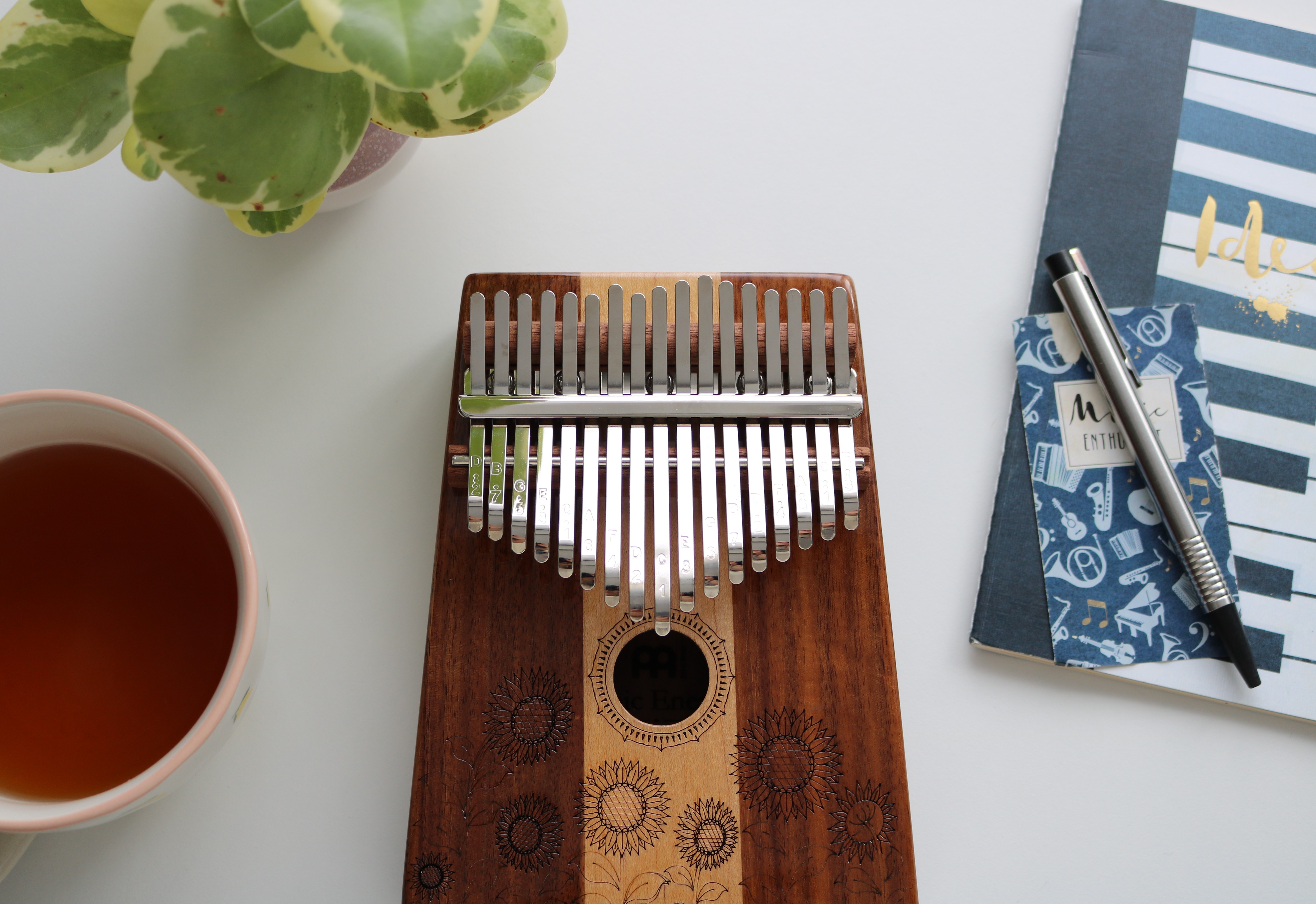
I have been wanting to become a music therapist ever since I learnt about this career path. I have collected much information about music therapy and the ways of training, and soon realised that it was not an easy endeavour – both joining the profession and finding detailed information about it. Journey To Music Therapy is dedicated to sharing comprehensive information on music therapy training, while also taking the opportunity to reflect on my personal experiences of becoming a music therapist. I hope this blog inspires you to explore the possibilities of music therapy, guiding you in finding the right path for you.
In this first blog post, I want to introduce myself and give a short definition of music therapy. You can read about my academic and musical background and I will share my reflections on a career in music. Lastly, I would like to answer the question “What is music therapy?” which sets the foundation for future articles.
About Me
Hey, I am Sonja, twenty-two years old, and I am from Kiel, Germany. After school, I volunteered at Corbenic Camphill Community in Scotland for a year, working with adults with intellectual disability (for more information about that, check out my other blog). I went on to study a bachelor’s degree in social work at Kiel University of Applied Sciences, specialising in rehabilitation and health. During this study programme, I completed two six-week placements – one at a day-care clinic for adults with psychiatric conditions and the other at an in-patient clinic for child and adolescent psychiatry. My bachelor’s thesis addressed the under-recognition of autism in females without intellectual disability. I am currently studying a master’s degree in music therapy at SRH University Heidelberg. I would be interested in working in the psychiatric sector in the future as well as pursuing an academic career. In my free time, I like doing yoga, reading, woodburning, being active in the voluntary fire brigade, and, of course, making music.
My Musical Background
I started making music from an early age. I sing and I play the piano, the guitar, the ukulele, and I have recently taken up drumming. Through lessons, I have improved my skills regarding singing, piano, guitar, and drums. However, I would not say that I am classically trained. Although I learnt to read sheet music, I am not proficient in sight-reading and I much prefer to play by ear. In terms of genre, what I play and sing mostly falls into the categories of pop, rock, and folk. I consider my voice my main instrument, as I can express myself most freely vocally. Singing in a choir and being part of multiple band constellations allowed me to experience the social element of music, while dancing connected me to the embodied layer of music. Since my teenage years, songwriting has provided me with an important tool to express myself and my feelings as well as process challenging situations. As a singer/songwriter, I love playing concerts. I also record, produce, and release my own music. My first EP “Ways” came out in 2020 and I continue to share my music through concerts and releases.
My Thoughts on a Career in Music
My previous career aspirations had also involved music. I had wanted to become a teacher for music and English, and at another time, I had hoped to become a professional singer/songwriter. However, my problem with teaching music at school was that the students would not all be excited about the subject. In my own experience with music classes in secondary school, most of the students were not actively participating. At best, they were not actively disturbing the lesson. After having given private piano lessons to my neighbour’s daughter who displayed great motivation, I simply could not face a largely disinterested class.
What kept me from training as a singer/songwriter, on the other hand, was that I did not find it quite as meaningful. It can certainly be of immense value to create music which other people can relate to. It could even have as much impact as to improve their well-being. But the downside is that there is no supporting relationship to the audience, aiming to improve their well-being. This has two implications: Firstly, people might not listen to your music in a context which is conducive to their well-being, and secondly, if they do, the benefit of your music on them might elude you. On top of that, I feared that being a professional musician would put too much pressure on being creative and, eventually, take away the fun. So, I decided to further pursue songwriting as a hobby, without the stress of having to make a living from it.
Around the age of 16, I found out about the profession of music therapy. This seemed exactly the kind of meaningful work which I was looking for. My motivation to become a therapist is rooted in my own experience with psychotherapy. What draws me to music therapy, specifically, is that music has been a positive coping mechanism for me. Consequently, supporting people in their personal development and facilitating change through music strikes me as a very purposeful occupation. Another quality that I appreciate about music is that it can serve as a communicative medium without the need for verbal expression (BAMT, n.d.). This makes it especially accessible for certain client groups like people with autism and people with intellectual disability (ibid.). I also like that music provides a lived body experience, thus having the power to transform states or feelings which manifest in the body. All in all, studying music therapy is the perfect way to combine my passion for music and musical skills with my ambition to improve people’s well-being.
What Is Music Therapy?
Music therapy is defined as “the targeted employment of music within a therapeutic relationship for the restoration, preservation, and promotion of physical and mental health.” [translation by the author] (DMtG, n.d.) The British Association for Music Therapy (BAMT, n.d.) elaborates that music therapy supports people’s “psychological, emotional, cognitive, physical, communicative and social needs.” It is emphasised that music therapy is for everyone, as music speaks to a universal human quality (BAMT, n.d.).
The scientific discipline of music therapy draws on knowledge from musicology, medicine, psychology, social sciences, and pedagogy (DMtG, n.d.). Moreover, music therapy can be informed by different psychotherapeutic approaches (e.g. psychodynamic, behavioural, systemic) or it can aim to combine them an in an integrative approach (ibid.).
Music therapists can work in a variety of settings, including but not limited to psychiatry, rehabilitation, neonatology, pediatrics, geriatrics, and palliative care (SRH Hochschule Heidelberg, n.d.). The sessions can be organised as individual or group sessions, allowing for different objectives of the therapy (DMtG, n.d.). A distinction is also made between active and receptive methods of music therapy (ibid.). The former – active music making, most often in the form of improvisation – creates a safe space to explore feelings and behaviours, while the latter focuses on the experience of listening to music, possibly evoking associations, images, memories, or physical sensations (ibid.).
Continue The Journey
I hope you enjoyed this first blog post on music therapy. Let me know if you have any topic suggestions for the future – I would be happy to take them into account. In the next few articles, I want to share with you the steps I took – from applications to interviews – towards being accepted into a master’s programme for music therapy.
References:
British Association for Music Therapy (BAMT) (n.d.). What is Music Therapy? Available online: https://www.bamt.org/music-therapy/what-is-music-therapy. 2024-10-12.
Deutsche Musiktherapeutische Gesellschaft (DMtG) (n.d.). Was ist Musiktherapie? Available online: https://www.musiktherapie.de/musiktherapie/was-ist-musiktherapie/. 2024-03-12.
SRH Hochschule Heidelberg (n.d.). Music Therapy. Our innovative approach that pays off. Your prospects in detail. Available online: https://www.srh-hochschule-heidelberg.de/en/master/music-therapy/. 2024-10-12.